top of page

Soy wax melts have become a popular alternative to traditional candles for many reasons. If you enjoy filling your home with delightful scents but want a cleaner, longer-lasting, and eco-friendly option, soy wax melts might be the perfect choice. This guide explores the benefits of soy wax melts, how to use and store them, safety tips, and even some fun DIY ideas to create your own custom melts at home.


Close-up view of colorful soy wax melts arranged on a wooden tray
Colorful soy wax melts on wooden tray


Why Choose Soy Wax Melts Over Traditional Candles?


Many people love the cozy ambiance candles provide, but soy wax melts offer several advantages that make them worth considering.


Eco-Friendly and Sustainable


Soy wax is made from soybean oil, a renewable resource grown and harvested each year. Unlike paraffin wax, which comes from petroleum, soy wax is biodegradable and burns cleaner. This means fewer toxins and less soot released into your home’s air, making it a healthier choice for you and the environment.


Longer Burn Time


Soy wax melts tend to burn slower than paraffin wax candles. This means you get more hours of fragrance from the same amount of wax. Since melts are used with a warmer rather than a flame, the scent disperses evenly without burning the wax away quickly.


Variety of Scents and Customization


Soy wax blends well with essential oils and fragrance oils, allowing for a wide range of scent options. From fresh florals to warm spices, you can find soy wax melts in almost any fragrance you prefer. This versatility also makes them ideal for DIY projects where you can mix scents to create your own unique blends. Essence of Allure has some great soy wax melts and they smell divine!

Mango Monster Luxe Essentials Luxury-Scented, Hand-poured Soy Wax Melts
$7.00
Buy Now


How to Use Soy Wax Melts Effectively


Using soy wax melts is simple, but a few tips can help you get the most out of them.


  • Choose the Right Warmer: Use an electric or tea light wax warmer designed for melts. Electric warmers offer consistent heat and are safer for long use.

  • Start Small: Begin with one or two cubes of wax. You can always add more if you want a stronger scent.

  • Allow Full Melting: Let the wax fully melt before turning off the warmer. This helps release the fragrance evenly.

  • Reuse the Wax: After the scent fades, you can remelt the wax a few times before it loses its fragrance completely.

  • Clean Your Warmer: Remove leftover wax by warming it slightly and wiping with a paper towel or using warm soapy water once cooled.


Storage Suggestions for Soy Wax Melts


Proper storage keeps your soy wax melts fresh and fragrant for longer.


  • Keep Away from Heat and Sunlight: Store melts in a cool, dark place to prevent melting or scent degradation.

  • Use Airtight Containers: Seal melts in jars or plastic containers to preserve their fragrance.

  • Label Your Scents: If you have multiple scents, label containers to avoid mixing or confusion.

  • Avoid Moisture: Keep melts dry to prevent any damage or scent loss.


Safety Precautions When Using Soy Wax Melts


While soy wax melts are safer than open-flame candles, it’s important to follow safety guidelines.


  • Never Leave Warmers Unattended: Turn off your wax warmer when leaving the room or going to sleep.

  • Use on Heat-Resistant Surfaces: Place warmers on stable, heat-resistant surfaces away from flammable materials.

  • Keep Away from Children and Pets: Warmers can get hot, so keep them out of reach.

  • Do Not Add Water: Adding water to melted wax can cause splattering or damage your warmer.

  • Follow Manufacturer Instructions: Always use your wax warmer as directed to avoid accidents.


Fun DIY Ideas for Custom Soy Wax Melts


Making your own soy wax melts is a rewarding way to personalize your home fragrance and even create thoughtful gifts.


Basic DIY Soy Wax Melts Recipe


Ingredients:


  • Soy wax flakes

  • Fragrance oils or essential oils

  • Silicone molds or ice cube trays

  • Double boiler or microwave-safe container


Steps:


  1. Melt soy wax flakes using a double boiler or microwave in short bursts.

  2. Remove from heat and add fragrance oils (about 1 oz per pound of wax).

  3. Stir gently to combine.

  4. Pour the mixture into silicone molds.

  5. Let cool and harden completely (about 1-2 hours).

  6. Pop out the melts and store in airtight containers.


Creative Ideas to Try


  • Layered Scents: Pour different colored wax layers with varying scents for a unique look and fragrance experience.

  • Add Botanicals: Mix dried flowers, herbs, or citrus peels into the wax before it hardens for a natural touch.

  • Personalized Shapes: Use themed silicone molds like hearts, stars, or seasonal shapes to match holidays or events.

  • Gift Sets: Package your melts in decorative boxes with labels describing the scent blends.


Using soy wax melts is a simple way to enjoy beautiful fragrances while supporting eco-friendly choices. Their longer burn time, variety of scents, and safety make them a great addition to any home. Whether you buy them or make your own, soy wax melts offer a fresh approach to home fragrance that fits modern lifestyles.


Try experimenting with different scents and DIY blends to find your perfect aroma. Your home will thank you with every warm, inviting breath of fragrance.

Magnesium butter is gaining attention as a natural way to support health and wellness. This unique product combines magnesium with nourishing oils to create a topical treatment that many find beneficial. If you are curious about how magnesium butter might improve your well-being, this post will guide you through its key advantages and practical uses of natural skincare.


Close-up view of a jar of magnesium butter with a smooth creamy texture
Jar of magnesium butter from Essence of Allure

What Is Magnesium Butter?


Magnesium butter is a topical cream or balm made by blending magnesium chloride flakes with natural oils such as coconut oil or shea butter. Unlike oral supplements, magnesium butter is applied directly to the skin, allowing magnesium to absorb through the pores. This method can bypass the digestive system, which some people find helpful if they experience stomach upset from oral magnesium.


The texture is rich and creamy, making it easy to massage into muscles or dry skin. Many users appreciate its soothing feel and subtle scent from the natural oils used.


Why Magnesium Matters for Your Health


Magnesium is an essential mineral involved in over 300 biochemical reactions in the body. It supports muscle and nerve function, energy production, bone health, and heart rhythm. Despite its importance, many people do not get enough magnesium from their diet.


Common signs of magnesium deficiency include muscle cramps, fatigue, headaches, and trouble sleeping. While magnesium supplements are widely available, topical magnesium butter offers a convenient alternative that some find more effective or easier to use.


Benefits of Using Magnesium Butter


1. Supports Muscle Relaxation and Recovery


Applying magnesium butter to sore or tight muscles can help reduce tension and promote relaxation. Magnesium plays a role in muscle contraction and relaxation cycles. When absorbed through the skin, it may ease cramps and stiffness after exercise or long periods of physical activity.


For example, athletes often use magnesium butter to soothe tired muscles and speed up recovery. Massaging it into areas like calves, shoulders, or lower back can provide targeted relief.


2. Enhances Sleep Quality


Magnesium influences neurotransmitters that regulate sleep, such as GABA. Many people find that using magnesium butter before bed helps calm the nervous system and improve sleep quality. Rubbing a small amount on the feet, arms, or chest can create a relaxing bedtime ritual.


Research suggests that magnesium supplementation may reduce insomnia symptoms, and topical application offers a gentle way to experience these benefits without swallowing pills.


3. Promotes Healthy Skin


The natural oils in magnesium butter nourish and hydrate the skin while magnesium itself supports skin barrier function. Regular use can help with dry, flaky, or irritated skin. Some users report improvements in conditions like eczema or psoriasis, although more research is needed.


Magnesium also has anti-inflammatory properties that may reduce redness and swelling when applied topically.

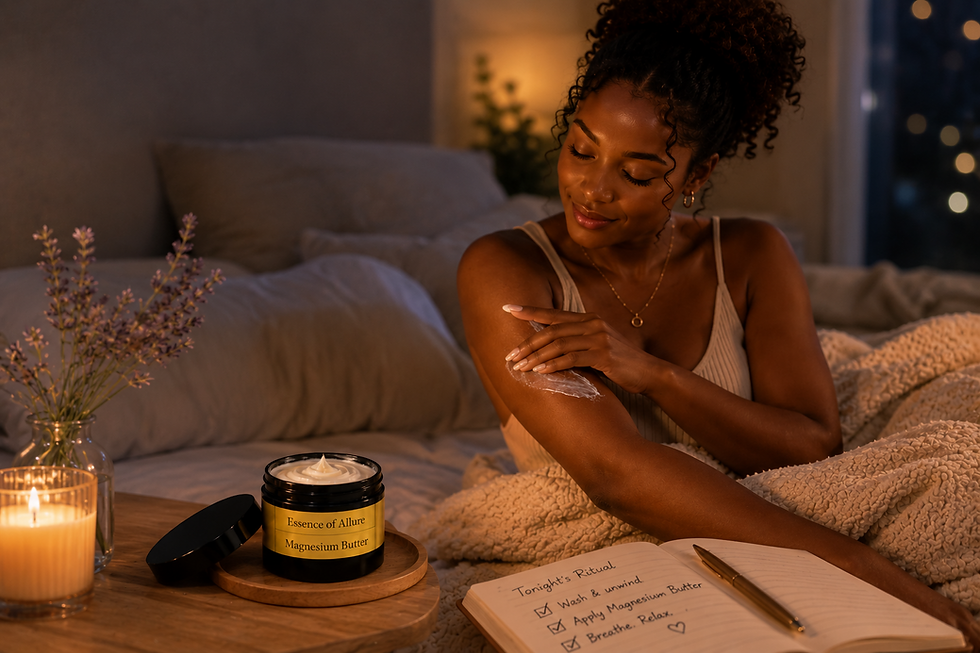
A woman is using Essence of Allure Magnesium Butter
A woman using magnesium butter right before bed

4. Supports Bone Health


Magnesium is crucial for bone formation and helps regulate calcium levels. While magnesium butter is not a substitute for dietary intake, it can complement other sources of magnesium to support overall bone strength.


Applying magnesium butter to areas prone to stiffness, such as joints, may provide comfort and encourage mobility.


5. Convenient and Easy to Use


Magnesium butter offers a simple way to increase magnesium levels without swallowing supplements. It is especially useful for people who have digestive issues or prefer natural skincare products. The creamy texture makes it easy to apply and absorb quickly.


You can use magnesium butter daily as part of your self-care routine, applying it after a shower or before bed.


How to Use Magnesium Butter Effectively


  • Start with clean, dry skin. This helps magnesium absorb better.

  • Apply a small amount. A pea-sized amount is enough for most areas.

  • Massage gently. Use circular motions to help the butter penetrate.

  • Focus on sore muscles or dry skin. Common spots include calves, shoulders, feet, and elbows.

  • Use consistently. Daily application can maximize benefits.

  • Patch test first. Some people may experience mild skin irritation, so test on a small area before regular use.


What to Look for When Buying Magnesium Butter


  • High-quality magnesium chloride. This form is well absorbed through the skin.

  • Natural oils and ingredients. Avoid synthetic fragrances or harsh chemicals.

  • Reputable brand. Look for products with positive reviews and transparent sourcing.

  • Appropriate texture. Choose a butter that feels comfortable on your skin and absorbs well.

  • Essence of Allure has a great topical Magnesium Butter. Transform your self-care routine today with this Soothing Magnesium Butter. Click here to experience the benefits for yourself!

Soothing, Pain-relieving Magnesium Butter
$35.00
Buy Now

Potential Considerations and Safety Tips


Magnesium butter is generally safe for most people. However, some may experience skin irritation or a tingling sensation upon first use. If this happens, reduce the amount applied or discontinue use.


People with kidney problems or certain medical conditions should consult a healthcare provider before using magnesium products. This post is for informational purposes and not a substitute for professional medical advice.


Real-Life Examples of Magnesium Butter Benefits


  • Runner’s recovery: A marathon runner used magnesium butter daily on sore calves and noticed reduced cramping and faster muscle recovery.

  • Sleep improvement: A person struggling with insomnia found that applying magnesium butter to their feet before bed helped them fall asleep more easily.

  • Skin hydration: Someone with dry, flaky skin applied magnesium butter regularly and saw smoother, more supple skin within weeks.


These examples show how magnesium butter can fit into different lifestyles and address various needs. Purchase yours today for better skin health and remember, always consult a healthcare provider before starting any new skincare or supplement routine.


Stress affects nearly everyone at some point, and finding effective ways to manage it can feel overwhelming. I discovered mindfulness meditation several years ago when my own stress levels were at their peak. What started as a simple experiment quickly turned into a powerful tool that transformed how I handle daily pressures. In this post, I want to share how mindfulness meditation helped me reduce stress and improve my overall well-being, along with practical tips you can try yourself.


Eye-level view of a person sitting cross-legged on a cushion in a quiet room with soft natural light
Mindfulness meditation practice in a calm indoor space

How Mindfulness Meditation Works to Reduce Stress


Price-Reduced Magnesium Butter
Buy Now

Mindfulness meditation involves paying close attention to the present moment without judgment. Instead of letting your mind race through worries about the past or future, you focus on your breath, bodily sensations, or sounds around you. This simple shift helps break the cycle of stress by:


  • Calming the nervous system: Mindfulness activates the parasympathetic nervous system, which slows heart rate and lowers blood pressure.

  • Reducing rumination: It interrupts repetitive negative thoughts that fuel anxiety and stress.

  • Improving emotional regulation: You become more aware of your feelings and better able to respond calmly rather than react impulsively.


When I first started, I was surprised how just a few minutes of focused breathing could quiet my mind and ease tension in my body. Over time, this practice built resilience, making stressful situations easier to handle.


Personal Experience: Starting Small and Building Consistency


I began with just five minutes a day, sitting quietly and focusing on my breath. At first, my mind wandered constantly, but I learned to gently bring my attention back without frustration. This patience was key. After a few weeks, I noticed I felt less overwhelmed by work deadlines and family demands.


Here are some tips that helped me stay consistent:


  • Set a regular time: I chose mornings before starting my day to meditate. This created a routine.

  • Create a dedicated space: A quiet corner with a cushion and soft lighting made it inviting.

  • Use guided meditations: Apps and online videos provided structure and encouragement.

  • Be kind to yourself: Missing a day didn’t mean failure; I simply resumed the next day.


This gradual approach made mindfulness meditation a sustainable habit rather than a chore.


Scientific Evidence Supporting Mindfulness for Stress Relief


Research supports what I experienced personally. Studies show mindfulness meditation can:


  • Lower cortisol levels, the hormone linked to stress

  • Decrease symptoms of anxiety and depression

  • Improve sleep quality, which often suffers under stress

  • Enhance focus and cognitive flexibility, helping you adapt to challenges


For example, a 2014 study published in JAMA Internal Medicine found that mindfulness meditation helped reduce anxiety and pain in participants with various conditions. Another study in the journal Psychoneuroendocrinology showed that regular mindfulness practice lowered cortisol levels after stressful tasks.


These findings suggest mindfulness meditation offers real, measurable benefits for managing stress.


Calming Vanilla-Lavender Body Butter
Buy Now

Close-up view of a person’s hands resting on their knees during meditation outdoors with greenery in the background
Hands resting calmly during outdoor mindfulness meditation

Practical Ways to Incorporate Mindfulness Meditation into Your Life


You don’t need hours or special equipment to start. Here are some simple ways to bring mindfulness into your routine:


  • Breathing exercises: Focus on slow, deep breaths for 3 to 5 minutes several times a day.

  • Body scan meditation: Mentally check in with different parts of your body, noticing tension and releasing it.

  • Mindful walking: Pay attention to the sensation of your feet touching the ground and the rhythm of your steps.

  • Mindful eating: Slow down and savor each bite, noticing flavors and textures without distractions.

  • Use reminders: Set alarms or sticky notes to prompt brief mindfulness breaks.


Even brief moments of mindfulness can interrupt stress and help you reset your mind.


Overcoming Common Challenges


Many people struggle with meditation because their minds feel too busy or they doubt the practice. I faced these challenges too. Here’s what helped me:


  • Accept distraction as normal: The goal isn’t to empty your mind but to notice when it wanders and gently return focus.

  • Start with guided sessions: Listening to a calm voice can keep you on track.

  • Be patient: Benefits build gradually, so give yourself time.

  • Combine with other stress relief: Exercise, healthy sleep, and social support complement mindfulness.


By approaching meditation with curiosity rather than judgment, it becomes a helpful tool instead of a source of frustration.


Mindfulness Meditation Beyond Stress Relief


While stress relief was my initial goal, mindfulness meditation also improved other areas of my life:


  • Better sleep: I fall asleep faster and wake feeling more rested.

  • Improved relationships: Being present helps me listen and respond more thoughtfully.

  • Greater self-awareness: I notice my habits and emotions more clearly, which supports healthier choices.


These benefits show how mindfulness meditation can enhance overall quality of life, not just reduce stress.


bottom of page